
Looking beyond prostate size
Benign prostatic hyperplasia, or BPH, is a common condition marked by prostate enlargement, but size is only part of the story. Our research explores how tissue remodeling, inflammation, and metabolic changes affect urinary function and quality of life.

About the Research
Unraveling the Complexity of Benign Prostatic Hyperplasia
Our mission is to improve the medical treatment of BPH-related Lower Urinary Tract Symptoms (LUTS) in aging men. LUTS represent a cluster of urinary problems that affects the aging male population worldwide significantly deteriorating their quality of life. Our limited knowledge on the disease pathology prevents us from developing more efficacious therapies. Our goal is to identify the molecular mechanism of inflammation-induced pathological changes in the prostate through translational research and the development of animal and cellular models.

Research Focus Areas
Tissue Architecture
BPH Pathology
Investigating the structural and cellular changes that drive benign prostatic hyperplasia, focusing on the intricate mechanisms of tissue remodelling and stromal expansion within the prostate gland.
Host Response
Inflammation & Immune Signaling
Exploring the chronic inflammatory environment of the prostate. We identify cytokine signatures and immune cell interactions that trigger pathological changes.
Molecular Signaling
Fibrosis & Tissue Remodeling
Mapping the molecular pathways of tissue scarring and collagen deposition. We study how pathological remodelling affects organ elasticity and overall urinary tract performance.
Clinical Outcomes
Urinary Function
Correlating histological and molecular findings with physiological urinary dynamics. Our models analyze the functional impact of prostate pathology on lower urinary tract health.
Techniques
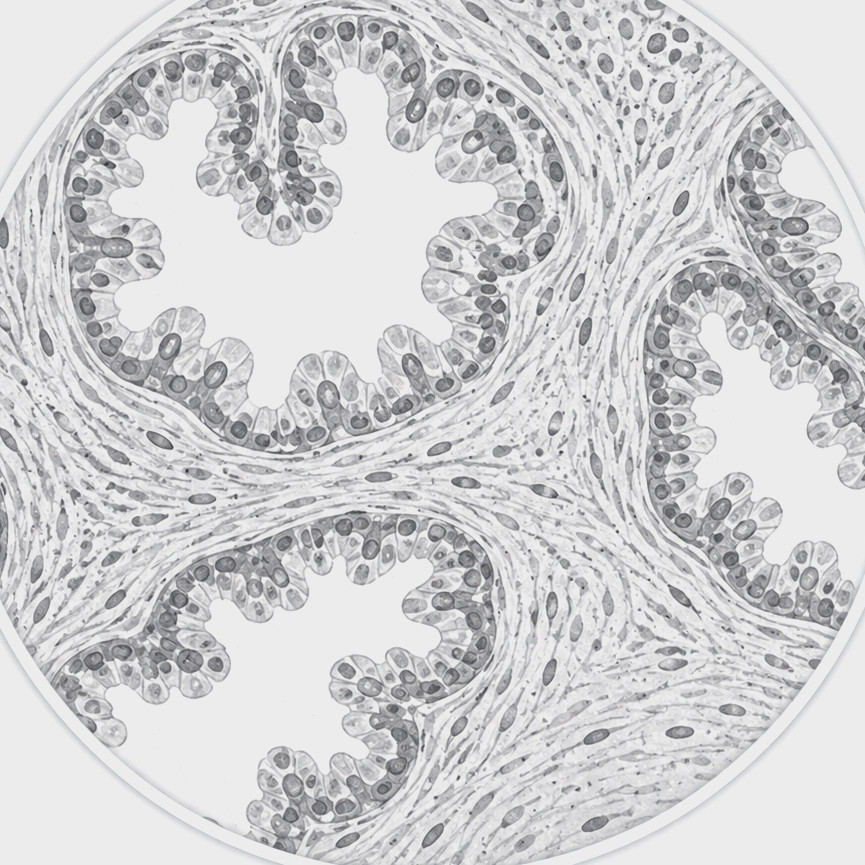
Histology & Molecular Staining
Mapping tissue structure and protein or RNA expression using histology, immunostaining, RNAscope, and multiplex fluorescence approaches.

Laser Capture Microdissection
Isolating specific tissue regions or cell compartments to better understand localized molecular changes in prostate pathology.

Bulk & Single-Cell RNA-Seq
Comprehensive transcriptomic profiling to identify inflammatory markers and fibrosis-associated gene networks.

Urodynamics
Assessing urinary function in preclinical models through measurements of bladder pressure, voiding behavior, and urinary output.

Multispectral Imaging
Separating overlapping fluorescent signals and tissue autofluorescence to improve visualization and quantification of stained specimens.

Omics & Molecular Profiling
Using proteomic and lipidomic approaches to investigate molecular changes associated with tissue remodeling and BPH pathology.
Recent News & Updates
Stay informed about our latest research discoveries, lab milestones, and scientific contributions.
Get in Touch
We welcome inquiries regarding our research, collaborations, and open positions. Contact our team to learn more about the Popovics Lab's mission to advance urological health.
Location
Virginia Health Sciences at ODU
Eastern Virginia Medical School
Lester Hall 442, Norfolk VA
Project Inquiries
popovip@odu.edu